Carpet and upholstery are among the largest soft-surface investments in a home, and they are the ones most commonly ruined by good intentions. Scrubbing a spill, using the wrong product, or over-wetting a sofa causes more permanent damage than years of ordinary use.
This guide covers the professional methods, how often each surface actually needs attention, what to do in the first sixty seconds of a spill, and which mistakes are genuinely irreversible.
What is actually in a carpet
Carpet functions as a filter. It traps soil, skin cells, pollen, pet dander, cooking grease aerosols and fine outdoor particulate, holding them out of the air until it becomes saturated. That is a benefit while capacity remains and a problem once it is exceeded, at which point ordinary foot traffic re-releases particles.
Most of the material in a carpet is dry particulate that vacuuming can remove — if the vacuuming is thorough. Slow passes matter enormously: a single quick pass removes a fraction of what four slow passes over the same strip removes. The gritty soil at the base of the fibers is what actually destroys carpet, abrading fibers every time someone walks across it.
Hot water extraction versus low-moisture methods
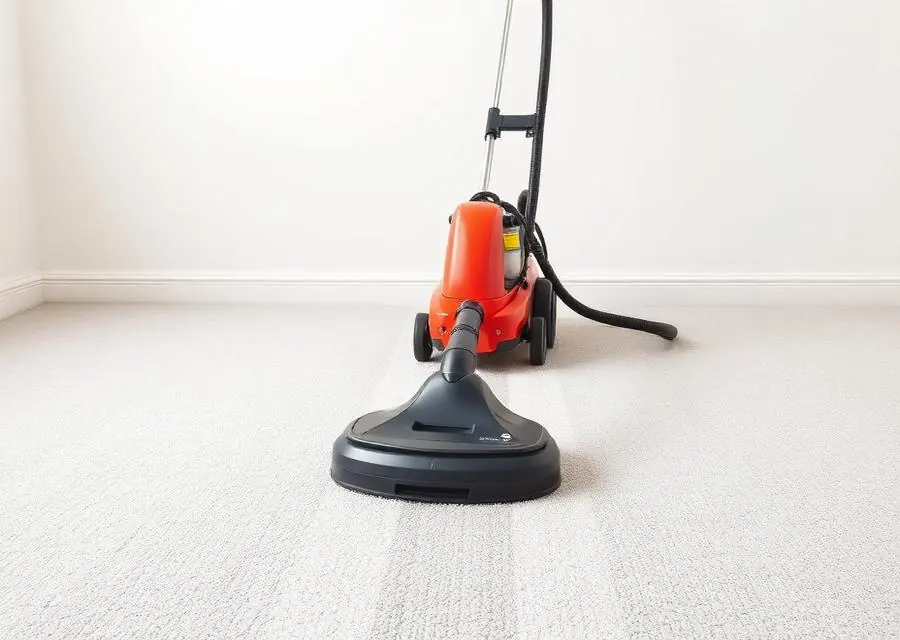
Hot water extraction, commonly called steam cleaning, injects heated solution into the fibers and immediately vacuums it out along with suspended soil. It removes the most soil of any method and is what most carpet manufacturers specify to keep a warranty valid. The trade-off is drying time, typically four to eight hours with proper airflow.
Low-moisture encapsulation applies a polymer that crystallizes around soil so it can be vacuumed away, drying in one to two hours. It is excellent for commercial maintenance between deep cleans and for situations where downtime is unacceptable, but it does not extract deep soil. The professional pattern is encapsulation for interim maintenance and extraction for restorative cleaning.
- Hot water extraction: deepest clean, 4–8 hour dry time, manufacturer-preferred
- Encapsulation: fast dry, ideal for commercial interim maintenance
- Dry compound: good for moisture-sensitive fibers, lighter soil removal
How often to clean
Manufacturers commonly require professional cleaning every twelve to eighteen months to maintain warranty coverage, and that is a reasonable baseline for a low-traffic household. Real-world frequency should scale with occupancy.
Households with pets or children generally need six to twelve month intervals; allergy sufferers benefit from every six months; and commercial traffic lanes need quarterly attention. Upholstery follows a similar logic — every twelve to twenty-four months for a normally used sofa, more often for a primary family couch or anything pets sleep on.
- Low-traffic home: every 12–18 months
- Pets or children: every 6–12 months
- Allergies or asthma: every 6 months
- Commercial traffic lanes: quarterly
Spill first aid: the first sixty seconds
Blot, never rub. Rubbing drives the spill into the backing and permanently distorts the fiber twist, which shows as a dull patch long after the stain itself is gone. Work from the outside of the spill inward to avoid spreading it, using a clean white cloth so dye does not transfer.
For most spills, cool water and blotting outperform any product. Avoid hot water on protein stains — blood, milk, egg — because heat sets them. Avoid bleach and any general-purpose cleaner containing optical brighteners on carpet. When a spill is large, place a thick pad of towels over it and stand on them to draw liquid out of the backing before treating the surface.
Pet accidents need enzymes, not masking
Pet urine is the hardest common contaminant because it penetrates through the carpet into the pad and often into the subfloor, and because it changes chemically as it dries into crystalline salts that reactivate with humidity. Surface cleaning removes the visible stain and leaves the odor source untouched.
Enzyme treatment digests the organic compounds causing the odor and must be applied generously enough to reach as deep as the urine did — usually far more product than people expect — then left to dwell for hours, not minutes. Severe or repeated accidents may require sub-surface extraction, pad replacement or subfloor sealing. Vinegar and baking soda temporarily mask the smell and do not resolve it.
Upholstery: read the tag first
Every piece of upholstered furniture carries a cleaning code, and ignoring it is how sofas get ruined. W means water-based cleaners are safe. S means solvent only, and water will leave rings. WS accepts either. X means vacuum only — no liquid of any kind, professional or otherwise.
Natural fibers behave differently from synthetics: silk and linen mark easily, and untreated cotton can shrink. Leather needs pH-appropriate cleaners and conditioning rather than extraction. When a piece is valuable or the code is missing, test in a hidden area or have a professional identify the fiber before anything wet touches it.
Mistakes that cause permanent damage
Over-wetting is the most common and most expensive. Saturating carpet without adequate extraction leaves moisture in the pad, which produces odor, encourages microbial growth and can cause the backing to delaminate. Rental machines cause most of these cases because their vacuum recovery is far weaker than truck-mounted or professional portable equipment.
Other irreversible mistakes: using bleach or acidic products on wool, applying heat to protein stains, scrubbing with stiff brushes, leaving furniture on damp carpet so metal and wood stain the fibers, and using off-the-shelf spot removers that leave sticky residue which then attracts soil and creates a permanent dark patch exactly where the stain used to be.
Getting professional results
Professional cleaning is mostly about equipment and process: pre-vacuuming, a pre-spray with correct dwell time, agitation appropriate to the fiber, hot extraction with high recovery, grooming, and forced airflow to speed drying. Any one of those steps missing shows up as a slower dry or a faster resoil.
We clean carpets, rugs and upholstery across San Jose and the Bay Area with fiber-appropriate methods, enzyme protocols for pet situations and airflow drying so rooms are usable the same day. Tell us the fiber, the room sizes and the problem areas and we will quote in writing within the hour.
Frequently asked
Quick answers
How long does carpet take to dry after cleaning?
Four to eight hours with proper extraction and airflow. Anything longer than twelve hours suggests over-wetting or inadequate recovery.
Does professional cleaning remove pet odor permanently?
Enzyme treatment resolves most cases. Severe or repeated accidents that reached the pad or subfloor may need sub-surface extraction or pad replacement.
Will cleaning make my carpet get dirty faster?
Only if residue is left behind. Proper rinsing and extraction leave no sticky residue, so soiling returns at the normal rate.