Clean windows change a building more than almost any other single service, and dirty ones are the fastest way for an otherwise well-maintained property to look neglected. In the Bay Area there is an additional urgency: our water is hard, and hard water does not just dirty glass, it damages it.
This guide covers why local windows stain the way they do, how professionals achieve streak-free results, how often glass should be cleaned to avoid permanent etching, and what to expect from a residential or commercial window service.
Hard water is the local enemy
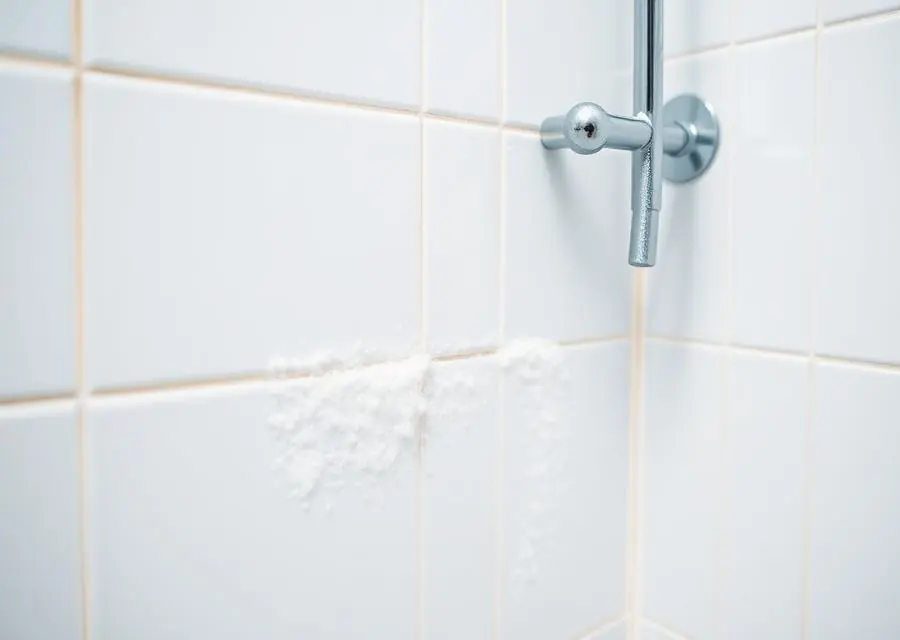
Most of the Bay Area receives moderately to very hard water, rich in calcium and magnesium. When sprinkler overspray, rain runoff carrying roof minerals, or a hose lands on glass and evaporates, the minerals stay behind as a white film. Repeated cycles build layers that ordinary glass cleaner cannot touch.
Left long enough, those deposits do more than sit on the surface. Minerals combined with sunlight begin to bond with and etch the silica in the glass, creating permanent cloudiness that no cleaning can reverse — only polishing or replacement. This is why window cleaning in this region is genuinely preventive maintenance rather than cosmetics.
Why household glass cleaner leaves streaks
Consumer glass sprays contain surfactants and additives that leave a thin residue. On a small mirror that residue is invisible; on a large window in direct sun it dries unevenly and produces the streaks everyone blames on technique. Paper towels compound the problem by shedding lint and pushing residue into corners.
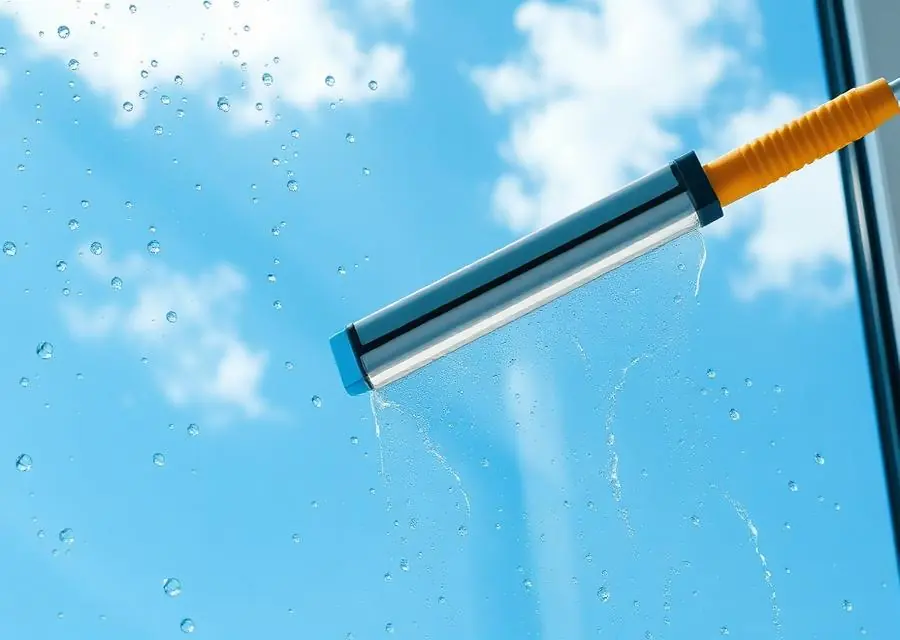
Professionals use a very dilute soap solution, a scrubber to release soil, and a squeegee with a sharp rubber blade to remove the water in a single controlled pass. There is nothing left on the glass to dry unevenly. The technique is learnable, but the equipment matters as much as the method.
- Never clean glass in direct sunlight — it dries before you finish
- Use a squeegee, not paper towels
- Dry the blade edge between passes
- Detail edges with a dedicated microfiber cloth
The full scope: glass is only part of it
A genuine window cleaning service includes more than the pane. Screens should be removed, washed and dried — leaving dirty screens in place recontaminates clean glass with the first breeze. Tracks and sills hold grit, insects and debris that must be vacuumed before wet cleaning, otherwise the debris turns to mud.
Frames, especially white vinyl, hold oxidized dirt that makes clean glass look dull by contrast. Exterior sills and the underside of the top frame collect cobwebs. When you compare quotes, confirm whether screens, tracks, sills and frames are included, because that is where most of the price difference between two quotes actually lives.
How often to clean
For most Bay Area homes, twice a year is the right cadence — typically spring and fall. Homes with sprinklers hitting the glass, near construction, close to the coast with salt exposure, or under heavy tree cover need quarterly service to stay ahead of mineral bonding.
Commercial storefronts are a different calculation: appearance is revenue, so weekly or biweekly exterior cleaning is standard for retail and restaurants, with full interior and exterior service monthly or quarterly. Offices generally do interior and exterior quarterly with more frequent entry glass attention.
- Residential: twice yearly, quarterly with sprinkler or coastal exposure
- Storefront retail and restaurants: weekly or biweekly exterior
- Offices: quarterly full service, entry glass more often
Removing existing hard-water stains
Light mineral film usually responds to an acidic descaler — citric, oxalic or a specialized product — applied with dwell time and agitated with a non-scratch pad. Heavier deposits need a cerium oxide polish, a mechanical process that removes a microscopic layer of the glass surface itself.
Polishing is skilled work: too much pressure or heat distorts the glass optically, so it is not a DIY job on a large window. And once etching has progressed far enough, no treatment restores clarity and replacement is the only remedy. That threshold is the reason prevention beats restoration by a wide margin economically.
Safety and access realities
Ground-floor windows are straightforward. Second-story and above are not, and falls from ladders are among the most common serious home-maintenance injuries. Professional crews use water-fed pole systems with purified water for many upper-floor exteriors, which is safer and leaves no spots because deionized water dries mineral-free.
For multi-story commercial buildings, access equipment, permits and specialized insurance apply. Always confirm that a window cleaning company carries current general liability and workers' compensation before anyone goes up on your property — this is the service where that documentation matters most.
What a good quote looks like
Residential window cleaning is usually priced per pane or per window, commonly $6 to $14 per standard window for interior and exterior including screens and tracks, with multipliers for upper stories, French panes, skylights and heavy mineral treatment. Whole-home quotes for a typical Bay Area house often land between $250 and $600.
A clear quote states the pane count, whether interior is included, whether screens and tracks are included, and whether hard-water restoration is separate. Anything less specific tends to become a conversation on the day, which is exactly what a written scope exists to prevent.
Booking window service
Pair window cleaning with other exterior work where possible — gutter clearing, pressure washing or solar panel cleaning — because a single visit with the same access equipment is cheaper than three. Schedule after any pressure washing, never before, so overspray does not undo the glass work.
We clean residential and commercial glass across San Jose and the Bay Area including screens, tracks, sills and hard-water treatment, with written per-pane pricing and a one-hour quote response. Send your window count or a couple of photos and we will scope it accurately.
Frequently asked
Quick answers
Can hard water stains be removed from glass?
Light and moderate deposits respond to acidic descalers and cerium oxide polishing. Once minerals have etched into the glass, the damage is permanent and only replacement restores clarity.
How often should home windows be cleaned?
Twice a year for most Bay Area homes, quarterly where sprinklers hit the glass or where there is coastal, construction or heavy tree exposure.
Are screens and tracks included in window cleaning?
They should be. Ask explicitly, because excluding screens and tracks is the most common way a low quote becomes an incomplete job.